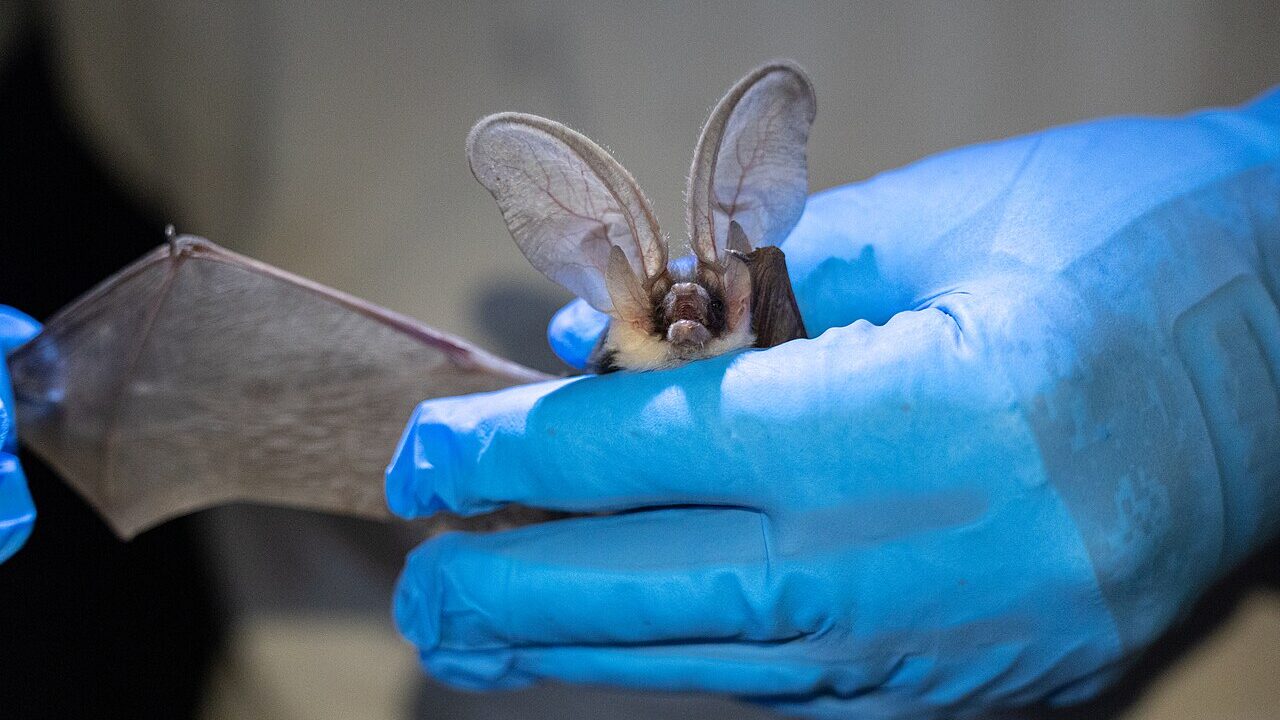
To understand where a rare species is going, scientists have gone back as far as 2,100 years. A study published in PLOS One this week by researchers at Northern Arizona University and colleagues used genetic analysis of ancient, historical and modern samples from spotted bats across western North America, 121 individuals in all, to describe how the species’ populations are structured and how they have changed, according to the report.
Spotted bats are close to unobservable in the ordinary way: nocturnal, fast, solitary roosters spread thinly across a huge range. The samples therefore span every source available, live captured bats, museum specimens collected between 1904 and 1991, contemporary specimens from 1994 to 2025, and six ancient specimens recovered from a northern Arizona cave, radiocarbon-dated to roughly 120 to 2,100 years old.
Across that span, the team could measure genetic diversity and relatedness and identify differences between northern and southern populations, exactly the baseline conservation biology needs. Bats make up a fifth of all mammal species globally, and North American populations face habitat loss, climate change and white-nose syndrome; without knowing what natural population structure looks like, it is impossible to tell disturbance from ordinary variation.
The study carries stated limits: sampling bias is real, with many modern specimens originating from a single cave, and further work is needed to separate the effects of particular human disturbances on movement and population dynamics.
The method, though, is the headline. Museum drawers and cave floors have become time machines for genetics, letting a species that refuses to be watched tell its own history anyway. For a bat that roosts alone in cliff cracks across the West, the archive may be the only census it ever gets.
The ancient specimens are the study’s irreplaceable piece: six bats from a cave floor, dead for up to two millennia, carrying genetic information from before cities, highways, pesticides and white-nose syndrome existed in North America. Compared against museum skins from the century of collection and bats netted last year, they convert a snapshot into a film. Conservation decisions made from snapshots have a history of confident error; the film is harder to argue with.
US News Zone will continue to follow this research as further findings are published.
Related reading: A Spacecraft Photographs a Complete Auroral Oval From Above the Pole · Crops Face Many Stresses at Once, and Science Should Study Them That Way · Stanford Builds Lung Organoids With Their Own Resident Immune Cells