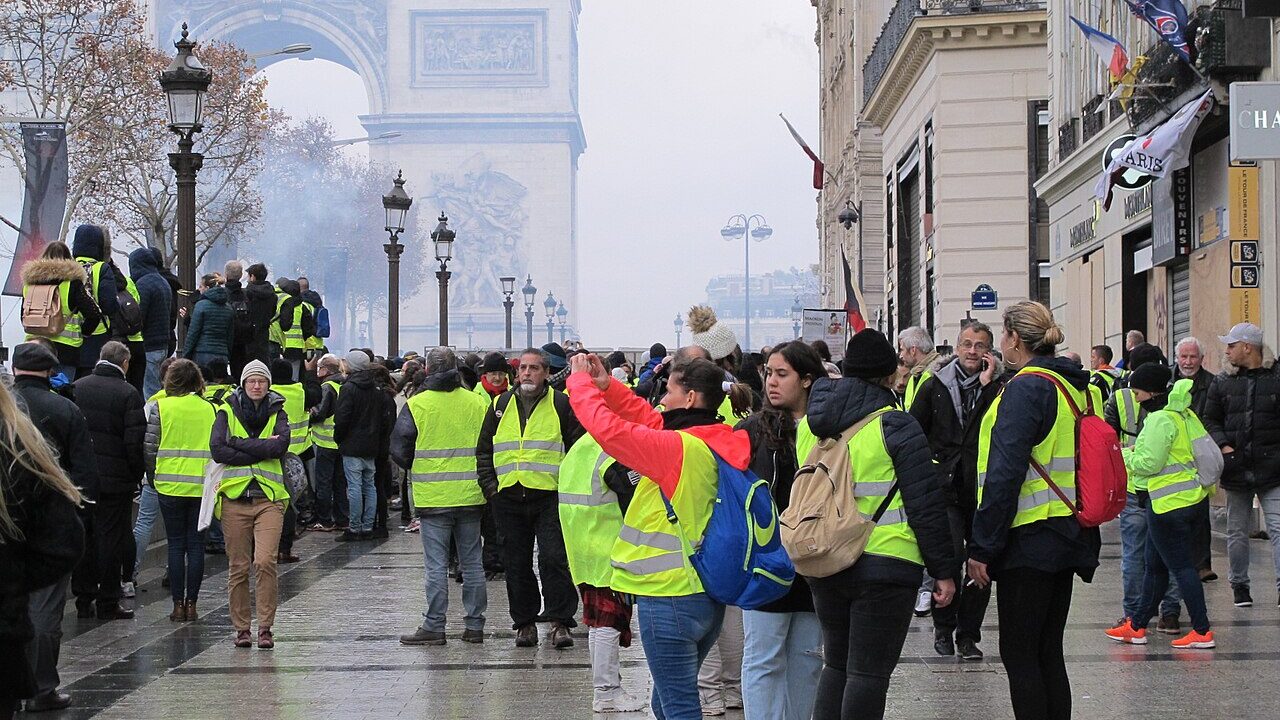
France is not the only European country where governments are looking beyond rioters to their parents, and to the apps that carry calls to the streets. Across Western Europe, a new approach to protest policing is taking shape, one that targets the networks around disorder as much as the disorder itself, and that raises questions about free speech, parental responsibility and platform power.
In France, the Senate’s bill would make people in violent crowds pay up to 10,000 euros for damage, including through deductions from family allowances, housing aid and other benefits. French law already generally holds parents liable for damage caused by their children under 18, but the bill would extend financial consequences to the household benefits that families rely on, a step critics say punishes poverty rather than violence. Supporters argue that without a financial consequence, there is no deterrent for people who join violent crowds knowing they are unlikely to pay.
The apps that carry the call to the streets are the second target. In Spain, a fact checker found calls for Halloween protests in 46 cities in at least nine European countries, and in Barcelona, social media posts under a protest hashtag directed people to a square, with QR codes sending them to messaging channels, according to Catalonia’s interior chief. Telegram closed a Barcelona group promoting Halloween looting, but a replacement group drew more than 2,000 members, according to Spanish media reports, showing how quickly a closed channel can be replaced.
Why platforms are now part of protest policy
Platforms matter because modern protests are organised in public and in private at the same time. A hashtag or a public post can mobilise thousands, while a closed messaging group can coordinate meeting points and tactics away from public view. Governments argue that rapid removal of content calling for disorder is a public safety measure, comparable to policing a street. Critics argue that rapid removal, especially when platforms act under government pressure, can sweep up lawful protest organising alongside calls for violence, and that the line between the two is often drawn after the fact.
France’s Senate also approved a bill allowing authorities to demand rapid removal of social media content calling for disorder, a measure that will be debated alongside the rioters pay bill in the National Assembly. The combination, financial liability plus content removal, is the clearest sign yet that European protest policy is moving from policing streets to policing the systems around streets: households, benefits and feeds.
A question for every democracy
The question facing every European democracy is where responsibility ends. If a parent can lose benefits because a child joined a violent crowd, if a protester can pay for damage caused by strangers in the same crowd, and if a platform can be ordered to remove a call to protest within hours, then the cost of protest rises sharply, even for people who never break a window. Supporters say that cost is the point, because the damage from recent unrest, estimated at over 1 billion euros in France alone, must be paid by someone. Critics say the cost falls hardest on the poorest families and the youngest protesters, and that a democracy should be careful about pricing dissent.
Europe’s answer to that question will not come from one bill in one country. It will come from a series of votes, court cases and platform decisions over the next year, in France, Spain and beyond, as governments test how far they can go, and as courts and voters test how far they should.