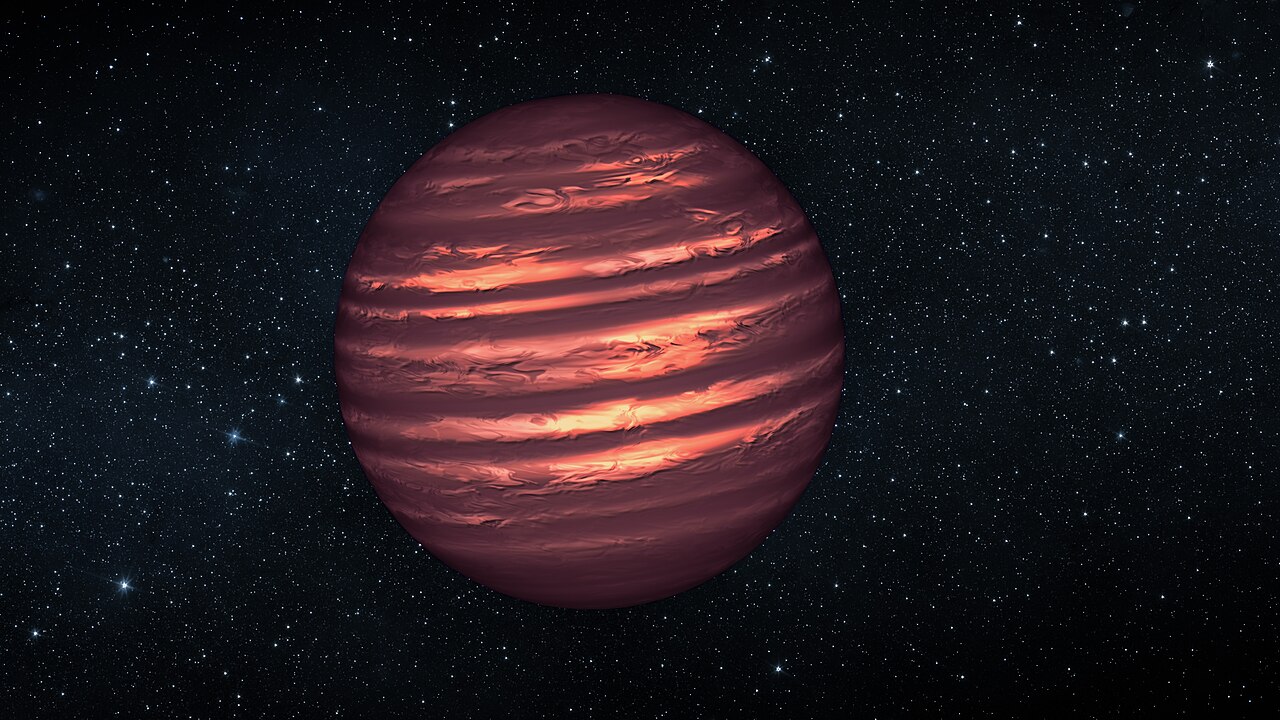
NASA’s SPHEREx infrared space telescope is opening a new window on some of the strangest objects in the universe — and finding skies made of water and methane.
A new study in The Astrophysical Journal, led by Zafar Rustamkulov and using SPHEREx data, mapped the atmospheric chemistry of 37 nearby brown dwarfs — objects too massive to be planets but too light to ignite into stars. The spectra revealed water, carbon dioxide, carbon monoxide and methane swirling in their atmospheres, across temperatures ranging from about 2,200 degrees Celsius down to minus 20 degrees.
SPHEREx, which launched in March 2025 and is managed by NASA’s Jet Propulsion Laboratory, measures brightness in 102 wavelength bands — capturing light that is impossible to observe from the ground because Earth’s atmosphere absorbs it.
Brown dwarfs occupy a fascinating middle ground between stars and giant planets, and the findings give astronomers a clearer picture of how their atmospheres change as they cool. But the data also poses a puzzle: current models can’t fully match the observed transitions in their clouds, according to the researchers.
The survey is just getting started. SPHEREx will scan the entire sky, and thousands more brown dwarfs are being analyzed — a haul that could rewrite textbooks on how these failed stars, and the giant planets they resemble, evolve.