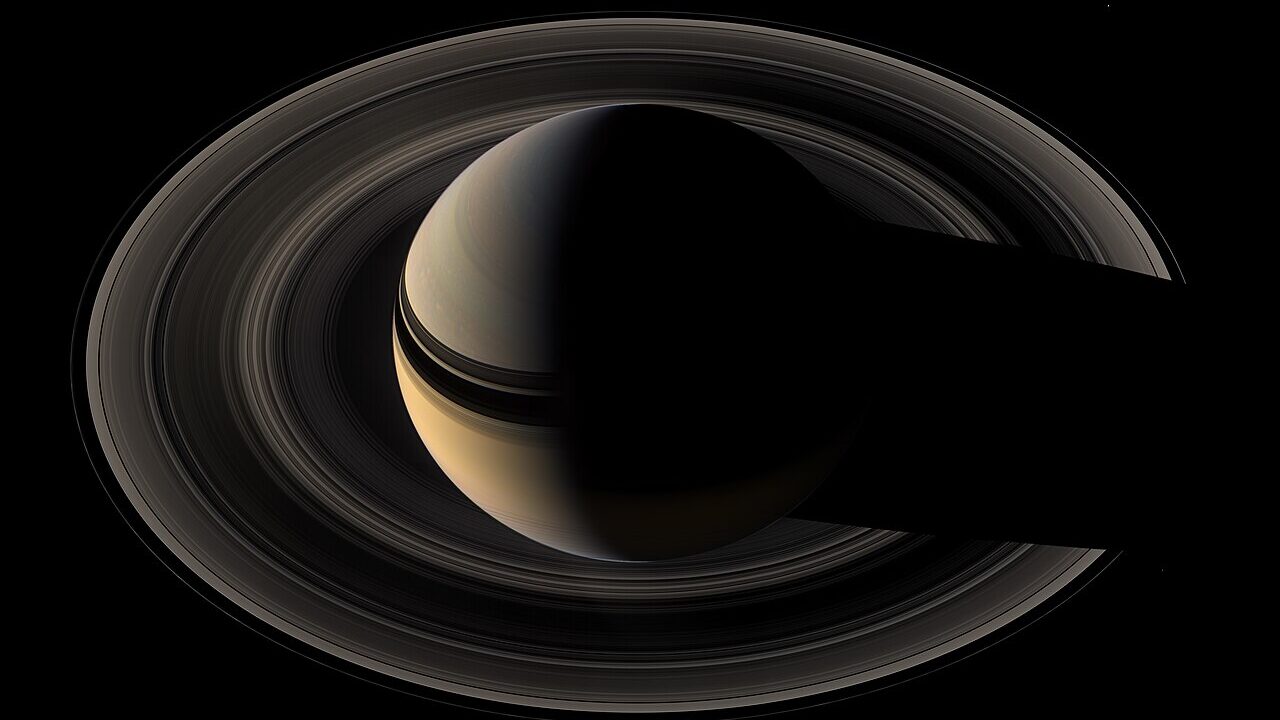
October is one of the year’s generous months for looking up, and NASA’s Jet Propulsion Laboratory has published its monthly guide to what is worth your attention. Saturn reached opposition on October 4, placing the ringed planet opposite the Sun and visible for most of the night, its rings now tipped enough to show the planet’s southern hemisphere after last year’s near edge-on view.
Later in the month, the Orionid meteor shower peaks on October 21 and 22. The meteors are debris from Halley’s Comet, and this year a bright Moon will wash out the faintest streaks, so the best window is the hours before dawn after the Moon sets. On October 27 and 28, the Moon passes close to the Pleiades, the Seven Sisters, visible unaided and better through binoculars.
The video below, from NASA Jet Propulsion Laboratory’s official YouTube channel, walks through the month’s highlights in under three minutes, including a recently revealed ten-sided atmospheric wave circling Saturn’s south pole in Hubble imagery. It is a practical watch: dates, directions and what to expect, with no equipment required beyond a clear sky and a little patience.
Video: NASA Jet Propulsion Laboratory (official YouTube channel). Embedded via YouTube; all rights remain with the channel. US News Zone does not download or re-upload third-party video.
Related reading: Watch: A Night of Auroras and Storms, Filmed From Orbit · Watch: Every CeeDee Lamb Catch From His 112-Yard Night Against Baltimore · Watch: The Final Outs as the Rays Complete Their Sweep of the Yankees