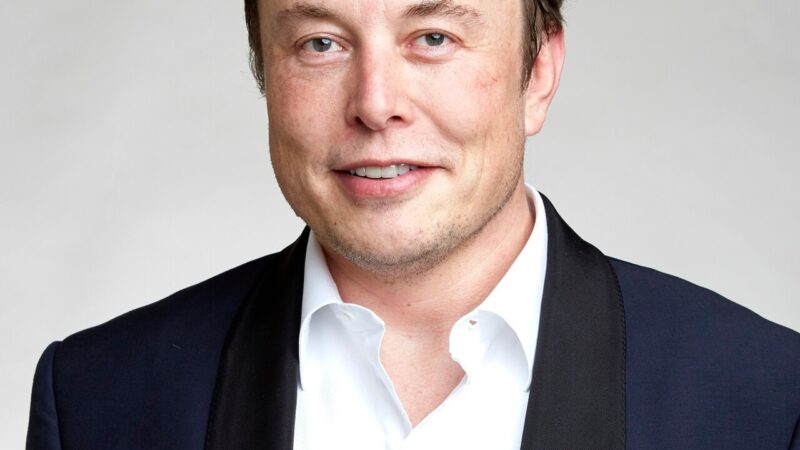

Elon Musk’s SpaceX has agreed to acquire Grain Management’s nationwide portfolio of low-band 800 MHz spectrum licences, a deal that would allow its Starlink service to become a full mobile carrier in the United States. Shares in AT&T, Verizon and T-Mobile fell sharply as investors priced in a powerful new competitor entering the American wireless market.
Carrier stocks slump on the competition threat
The agreement, announced last Thursday, covers up to 14 MHz of paired low-band airwaves — the frequencies prized for travelling long distances and penetrating walls — according to a Reuters report. The Wall Street Journal put the price at $8 billion, although neither company disclosed terms. SpaceX said the deal still requires approval from the Federal Communications Commission before it can proceed.
The market reaction was swift. AT&T, Verizon and T-Mobile lost between 5 and 7 per cent in after-hours trading on October 8, and the sell-off deepened the following day: T-Mobile closed down more than 13 per cent, while Verizon suffered what CNBC called its worst session since 2002. Deutsche Telekom, the majority owner of T-Mobile US, slid 7 per cent in European trading, and analysts at Citi warned the deal represented “an ongoing risk for the telecoms and cable stocks”.
Why low-band spectrum changes the game
For American wireless customers, the significance is technical as well as commercial. Satellite phone services have historically struggled indoors; low-band spectrum gives Starlink Mobile the coverage layer it needs to reach devices inside buildings, and SpaceX says most existing handsets already support the 800 MHz band without modification. Earlier this month the FCC separately authorised a new direct-to-device satellite constellation, handing Musk’s company both the orbital and the terrestrial pieces of a hybrid network. The move extends Starlink’s push to expand beyond its satellite base into a genuine facilities-based challenger.
Investors should be cautious about timing: analysts note that without a roaming agreement it will take years for SpaceX to build and sell a competitive service, and the FCC could still alter the terms. But the airwaves themselves are a scarce national asset — the same portfolio T-Mobile sold to Grain last year for $2.9 billion plus other licences — and they rarely change hands. Wall Street is betting that American mobile bills, long among the most expensive in the developed world, may finally face genuine competitive pressure, even as wider markets keep betting on a policy pause from the Fed.